
🔑 Key Points
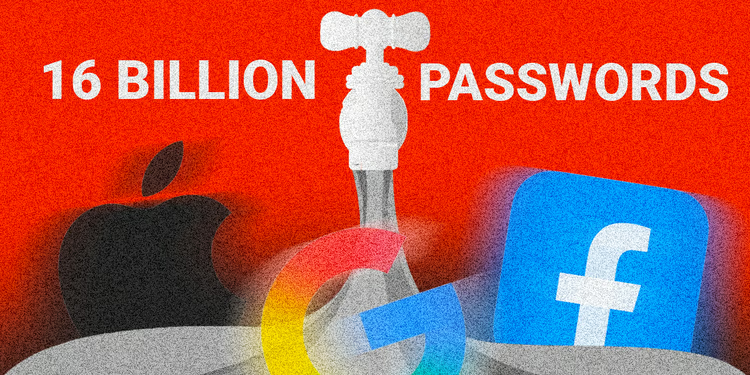
- A massive 16 billion usernames and passwords have been leaked in 2025, dubbed the "Mother of All Breaches," affecting platforms like Google, Apple, and Facebook. 😱
- This breach, driven by infostealer malware, provides a blueprint for phishing, identity theft, and account takeovers, threatening personal and corporate security. 🦠
- Immediate action—changing passwords, enabling MFA, and using passkeys—can protect users, while the breach signals a shift toward more secure authentication methods. 🛡️
🌟 Introduction to the 2025 Data Breach
In the digital tapestry of 2025, where every click and login weaves our lives into the internet, a catastrophic breach has torn through the fabric of cybersecurity. 🌐 Picture a cosmic vault holding the keys to billions of lives—your email, social media, bank accounts, and even government portals—now shattered, its contents strewn across the dark web like embers from a wildfire. 🔥 This is the reality of the 16 billion username and password leak, uncovered by Cybernews researchers and reported by Forbes, marking it as the largest data breach in history. 😲 This isn’t just a leak; it’s a digital heist of unprecedented scale, a blueprint for chaos that demands immediate action to secure your online life. 🚨
🔄 The Breach and Its Mechanics
This colossal breach, a compilation of 30 distinct datasets ranging from millions to 3.5 billion records, was orchestrated by infostealer malware—silent predators that infiltrate devices to harvest login credentials. 🦠 These datasets, structured with chilling precision (URL, username, password), target platforms like Google, Apple, Facebook, GitHub, Telegram, and government services. 🏛️ Unlike prior leaks like RockYou2024 (10 billion passwords) or the Mother of All Breaches (26 billion records), most of this data is fresh, making it a potent weapon for cybercriminals. 🔫 The scale—16 billion credentials against 5.5 billion internet users—implies multiple compromised accounts per person, amplifying the risk of mass exploitation. 📊
🌍 Real-World Impact and Risks
The fallout from this breach is a hacker’s paradise, enabling a wave of attacks:
- Phishing Attacks 🎣: Cybercriminals can craft targeted emails using leaked credentials, tricking users into revealing more data or clicking malicious links.
- Account Takeovers 🔓: Reused passwords across platforms could unlock your entire digital life—email, banking, social media—in seconds.
- Identity Theft 😷: Your data on the dark web could fuel fraudulent accounts or impersonation, draining finances and reputations.
- Ransomware and Extortion 💸: Access to corporate or government systems could lead to devastating system lockdowns or data extortion.
Cybersecurity expert Javvad Malik warns, “Do not wait for your credentials to appear in one of these breaches.” 🚫 Password reuse is the Achilles’ heel, and the structured data format makes automated attacks terrifyingly efficient. ⚡
📑 Detailed Analysis: The Mother of All Breaches
🧩 Overview and Scope
The 2025 breach, dubbed the "Mother of All Breaches," is a compilation of 16 billion username-password pairs, uncovered by Cybernews in early 2025. 📜 Unlike singular breaches, this is a curated dataset from 30 sources, each meticulously organized for maximum exploitability. Platforms like Google, Apple, Facebook, GitHub, and Telegram are heavily impacted, alongside VPNs and government portals. 🖥️ Vilius Petkauskas of Cybernews calls it “a blueprint for mass exploitation,” with its standardized format enabling rapid deployment in phishing and credential-stuffing campaigns. 📈
🧠 Origins and Mechanisms
The breach stems from infostealer malware, which covertly collects login details from infected devices, and credential stuffing, where attackers test stolen credentials across multiple platforms. 🕸️ These datasets, briefly exposed on the dark web, were aggregated with surgical precision, though their exact origins remain elusive. 🕵️♂️ While 184 million records overlap with prior leaks, the majority are new, amplifying the threat. Tether CEO Paolo Ardoino, reacting on X, announced PearPass, a local password manager, stating, “No cloud. No servers. No leaks. Ever,” highlighting the cloud’s vulnerabilities. ☁️
🔧 How It Works: The Hacker’s Playbook
The process behind this breach is chillingly efficient:
- Infection: Malware infiltrates devices via phishing emails, malicious downloads, or unsecured apps, silently harvesting login data. 🦠
- Data Collection: Credentials are organized into structured datasets (URL, username, password), ready for exploitation. 📋
- Distribution: These datasets are sold or shared on the dark web, fueling a black market for stolen credentials. 🌑
- Exploitation: Hackers use automated tools for credential stuffing or craft targeted phishing campaigns to maximize damage. 🎣
This streamlined process makes the breach a plug-and-play toolkit for cybercriminals, with immediate risks to individuals and organizations. 🔍
⚡ Impacts: Immediate and Long-Term
The immediate risks are dire: phishing, account takeovers, identity theft, and ransomware threaten individuals and institutions. 💸 Long-term, this breach exposes the fragility of password-based systems. Google, Apple, and others are pushing passkeys, cryptographic alternatives immune to phishing. 🔒 The breach has also sparked a shift toward local storage solutions like PearPass, reducing reliance on vulnerable cloud systems. 🌟
⚠️ Challenges: Navigating the Fallout
- Password Reuse 🚫: Reusing passwords across platforms multiplies risks, as a single leak can compromise multiple accounts.
- Malware Detection 🧹: Infostealers are hard to detect, requiring robust antivirus software and user vigilance.
- Scale of Exposure 📊: With 16 billion credentials, the sheer volume overwhelms traditional response strategies, necessitating urgent action.
🧪 Protective Measures: A Cybersecurity Battle Plan
To combat this threat, adopt these actionable steps:
- Check for Breaches 🔎: Use Have I Been Pwned (haveibeenpwned.com) to verify if your email or phone is compromised. 📬
- Update Passwords 🔄: Create strong, unique passwords with letters, numbers, and symbols. Avoid “12345678” or “password.” 🚫
- Enable MFA 🔐: Add multi-factor authentication to email, banking, and social media for an extra security layer. 📱
- Use a Password Manager 📋: Tools like LastPass, 1Password, or PearPass generate and store complex passwords securely. 🛠️
- Adopt Passkeys 🔑: Switch to passkeys on supported platforms like Google and Apple for phishing-resistant authentication. 😎
- Scan for Malware 🧹: Run trusted antivirus software to detect and remove infostealers before updating passwords. 🦠
- Monitor Accounts 👀: Watch for suspicious activity in bank accounts, email, and social media, reporting issues immediately. 🚨
- Delete Old Accounts 🗑️: Remove unused accounts to shrink your digital footprint. 🧹
- Stay Vigilant 🛡️: Avoid suspicious links in emails or texts, as phishing attacks will spike post-breach. 🚔
🔮 Future Outlook: Redefining Cybersecurity
This breach is a wake-up call for a new era of cybersecurity. 🌅 Companies must adopt zero-trust frameworks and privileged access controls, while users embrace cyber hygiene—no weak passwords, no reuse. 🙅♂️ The shift to passkeys and local storage solutions like PearPass signals a move away from vulnerable password systems. 🌍 As cybercriminals evolve, so must we, leveraging AI-driven security tools and proactive monitoring to stay ahead. 🧭
📢 Conclusion and Call to Action
The 16 billion credential leak of 2025 is a digital reckoning, exposing the fragility of our online world. 🚨 But it’s also a chance to fortify your defenses. Check your accounts on Have I Been Pwned, update passwords, enable MFA, and explore passkeys. 💪 Tools like PearPass and antivirus software can safeguard your data, while vigilance against phishing keeps hackers at bay. 🛡️ The internet is a wild frontier, but with the right strategies, you can navigate it safely. Visit CyberNews or Forbes for updates, and take control of your digital life today! 🌟